Timeline
19th Century
1800–1899Western & Atlantic Survey Authorized
The Georgia General Assembly authorizes the survey of a state-owned railroad from the Tennessee River to a point on the Chattahoochee River — the route that will define Atlanta.
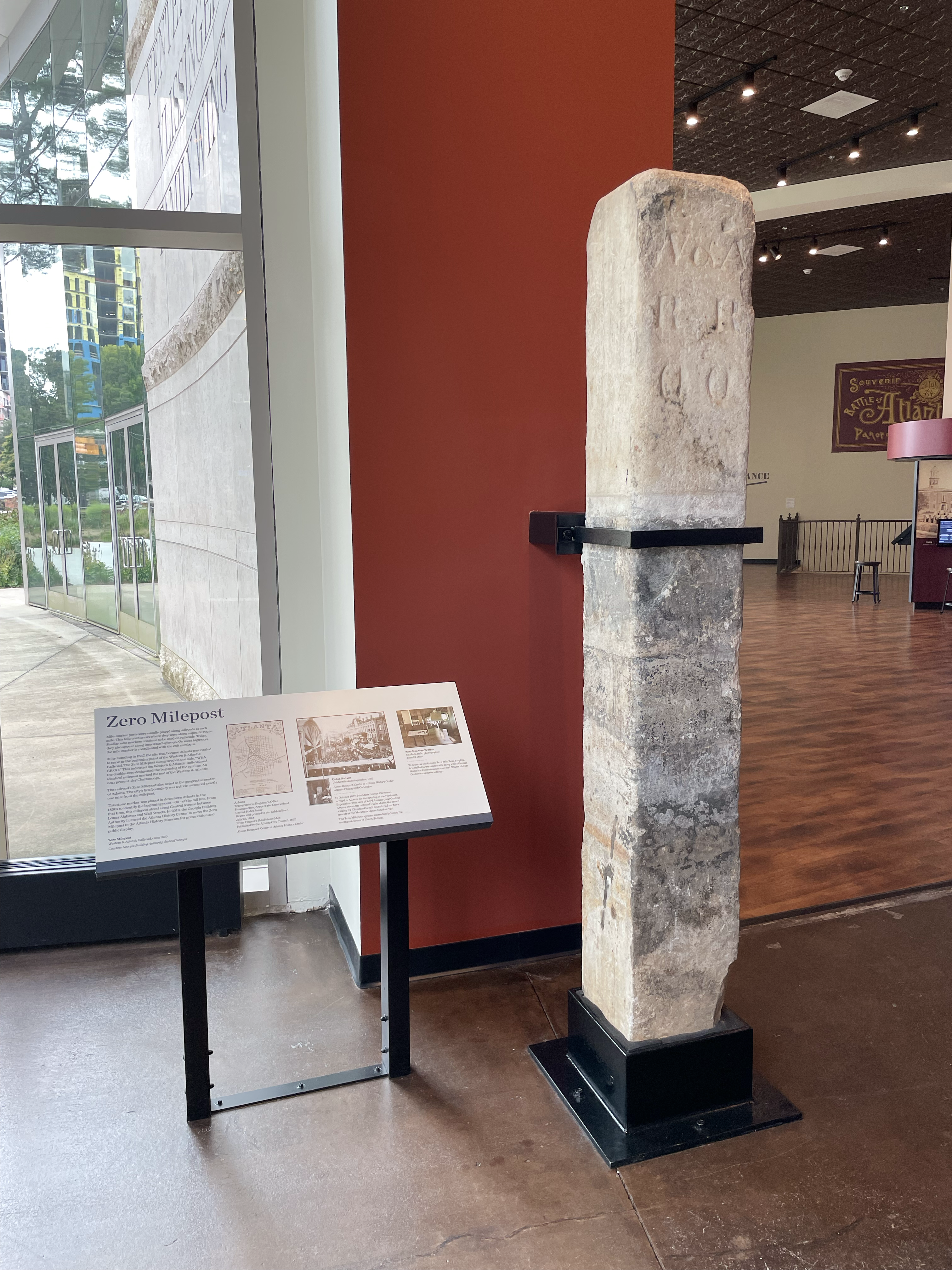
Zero Mile Post Driven
Chief Engineer Stephen Long drives the Zero Mile Post at the southeastern terminus of the Western & Atlantic Railroad, establishing the point that will become Marthasville — and later Atlanta.
Marthasville Renamed Atlanta
The city of Marthasville is renamed Atlanta, coined by railroad engineer J. Edgar Thomson as a feminized form of "Atlantic" — a nod to the Western & Atlantic line.
Western & Atlantic Reaches Chattanooga
The W&A line is completed to Chattanooga, making Atlanta the convergence of three rail corridors and establishing it as the Gate City of the South.
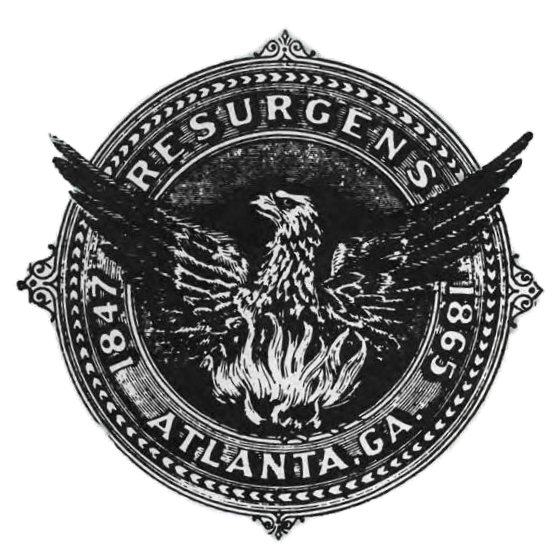
Atlanta Becomes an Incorporated City
Atlanta is incorporated as a city. Rail traffic is already the dominant force shaping its grid, economy, and growth.
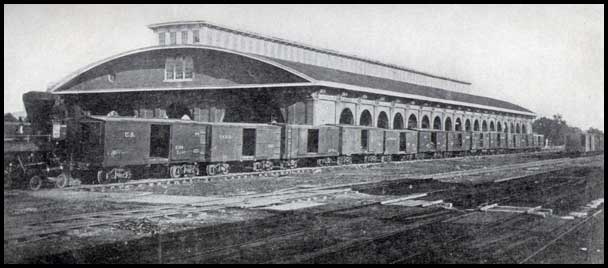
Union Depot Opens
Designed by architect Edward A. Vincent, Atlanta's first Union Depot opens, consolidating passenger rail arrivals from multiple lines into a single facility.
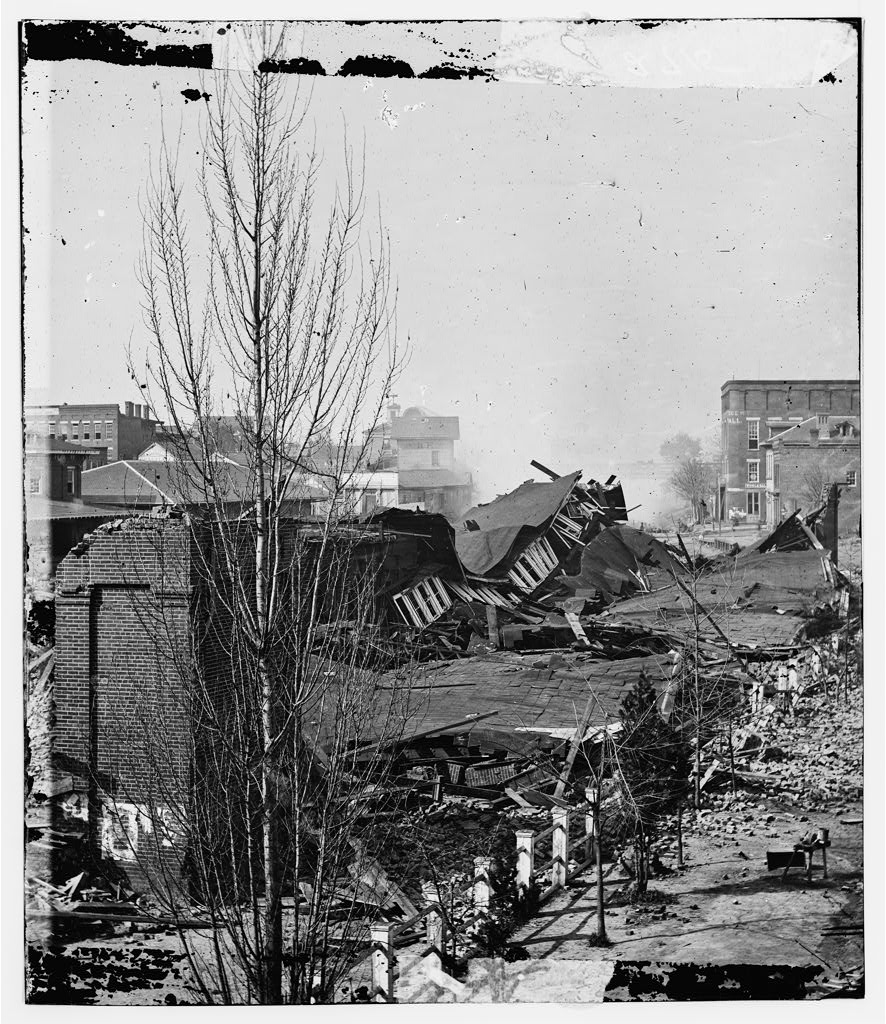
Union Depot Destroyed
The Union Depot is burned by the Union Army as it departs Atlanta, beginning Sherman's March to the Sea. The city's rail infrastructure is left in ruin.
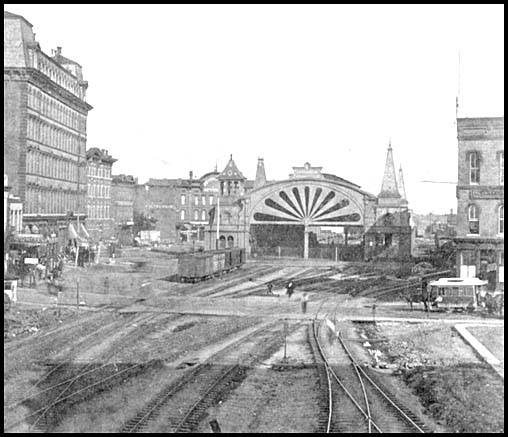
Second Union Station Opens
The second Union Station is built during the Reconstruction Era on the site of the 1853 depot. Designed by architect Max Corput in Second Empire style, it restores Atlanta's standing as a rail hub.
20th Century
1900–1999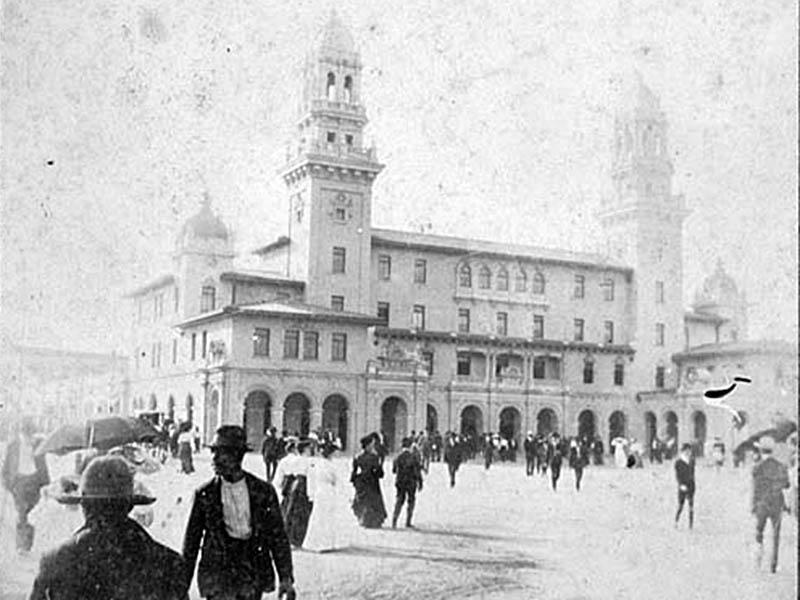
Terminal Station Opens
Terminal Station opens at Forsyth Street and Mitchell Street, designed by P. Thornton Marye in Beaux-Arts style. It serves 80 passenger trains per day and becomes Atlanta's principal rail hub.
View on Map →
Second Union Station Demolished
The Second Empire-style Union Station is demolished and replaced by a modern third station on the same site.
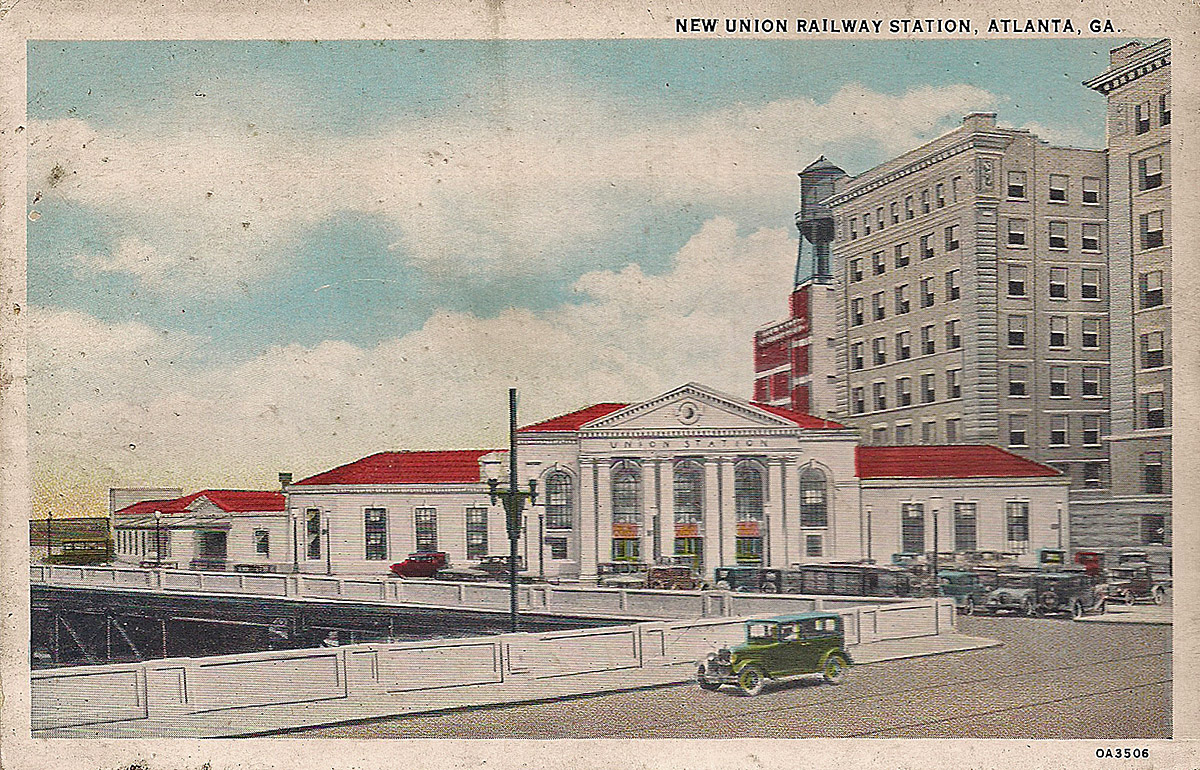
Third Union Station Opens
The Third Union Station opens, serving the Georgia Railroad, Atlantic Coast Line, and the Nashville, Chattanooga and St. Louis Railway.
Peak Rail Era
Atlanta handles record passenger and freight volumes through Terminal Station. Lines radiate outward to Chattanooga, Birmingham, Savannah, New Orleans, and New York.
Post-War Decline Begins
Automobile ownership rises rapidly after World War II. Passenger rail ridership begins a prolonged decline as highway infrastructure expands across the region.
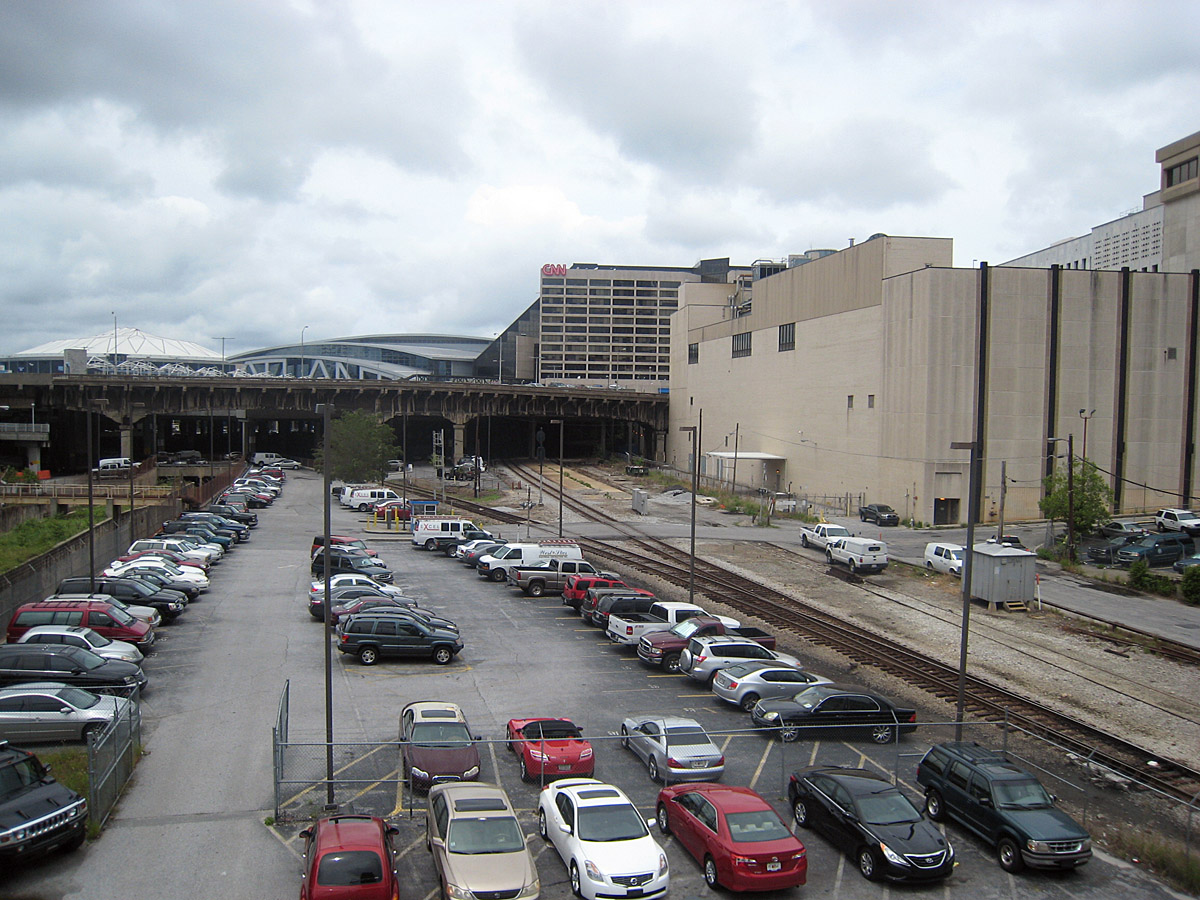
Third Union Station Demolished
The Third Union Station is demolished. Terminal Station would be destroyed the same year, erasing Atlanta's twin landmarks of the rail era.
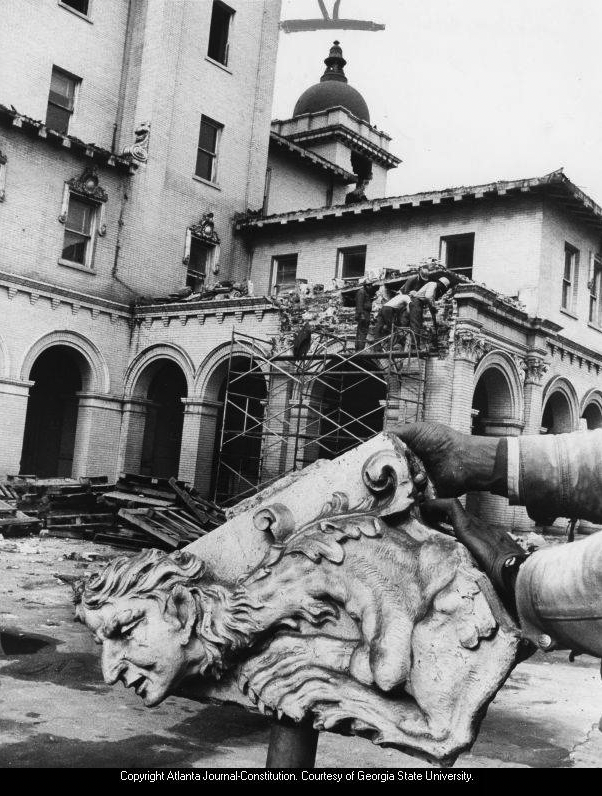
Terminal Station Demolished
Terminal Station is demolished to make way for the Richard B. Russell Federal Building, named after a known segregationist. The loss sparks lasting preservation advocacy in Atlanta.
View on Map →MARTA Rail Opens
The Metropolitan Atlanta Rapid Transit Authority opens its first rail segment between Avondale and Garnett stations. Atlanta's modern transit era begins.
Airport Line Completed
MARTA extends service to Hartsfield–Jackson Atlanta International Airport, creating one of the few direct airport-to-downtown rail connections in the American South.
Olympic Expansion
MARTA expands ahead of the Centennial Olympic Games, adding capacity on existing lines and improving station infrastructure across the system.
21st Century
2000–Present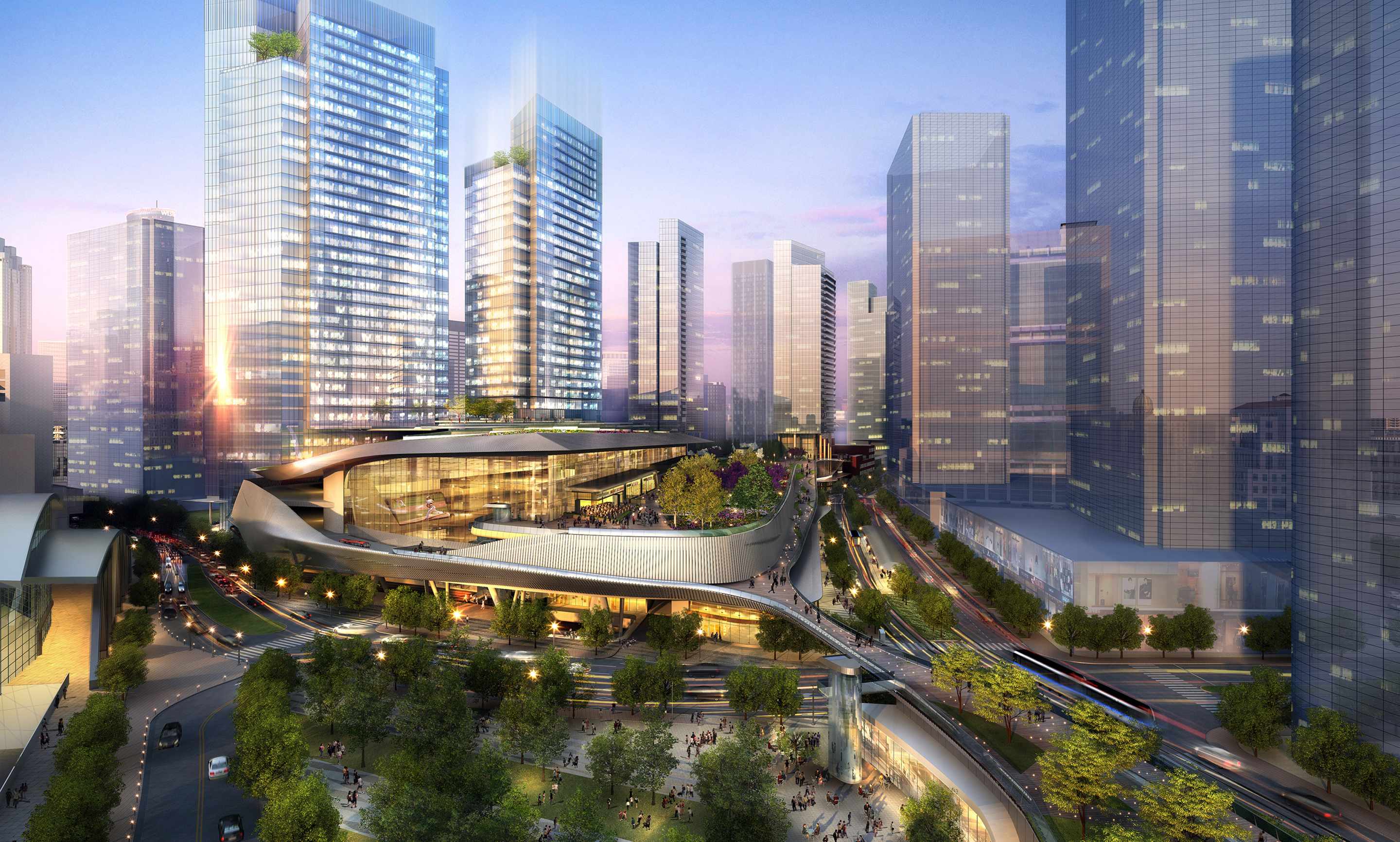
Obama Fast-Tracks the MMPT
President Barack Obama announces the final selection of the Multi-Modal Passenger Terminal as one of a small group of projects to participate in the Dashboard initiative, putting the permitting process on the fast track and cutting the timeline by as much as one year.
Norfolk Southern Raises Concerns
Norfolk Southern Railway, one of three Class I railroads which could serve the proposed terminal, states that it would be unable to operate both freight and passenger trains into the facility — casting doubt on the project's viability. Service may be ordered to the site by the U.S. Surface Transportation Board.

Gulch plans knock passenger rail off track
David Emory warns that the CIM Group proposal for the Gulch would fill the site with 9,000 parking spaces, blocking any future passenger rail terminal at the historic junction.
Extra! David Emory at ThreadATL →Amazon HQ2 Rumored at the Gulch
The Gulch site is rumored to be the new location of Amazon's second headquarters, renewing public attention on the long-vacant rail yards at the heart of downtown Atlanta.

Georgia moves to sell Gulch property without protections for passenger rail
The State of Georgia releases a bid invitation for 9.5 acres of the Gulch — public land since the founding of Atlanta — with no protections for the planned Multimodal Passenger Terminal.
Extra! Darin Givens at ThreadATL →
The Railroad Gulch is Atlanta's Dry Riverbed
Architect Jeff Morrison describes the Gulch as Atlanta's dry riverbed — where other cities have rivers, Atlanta has a tangle of railroad tracks and asphalt, fundamental to the city's creation yet one of its most challenging gaps.
Extra! Jeff Morrison at ThreadATL →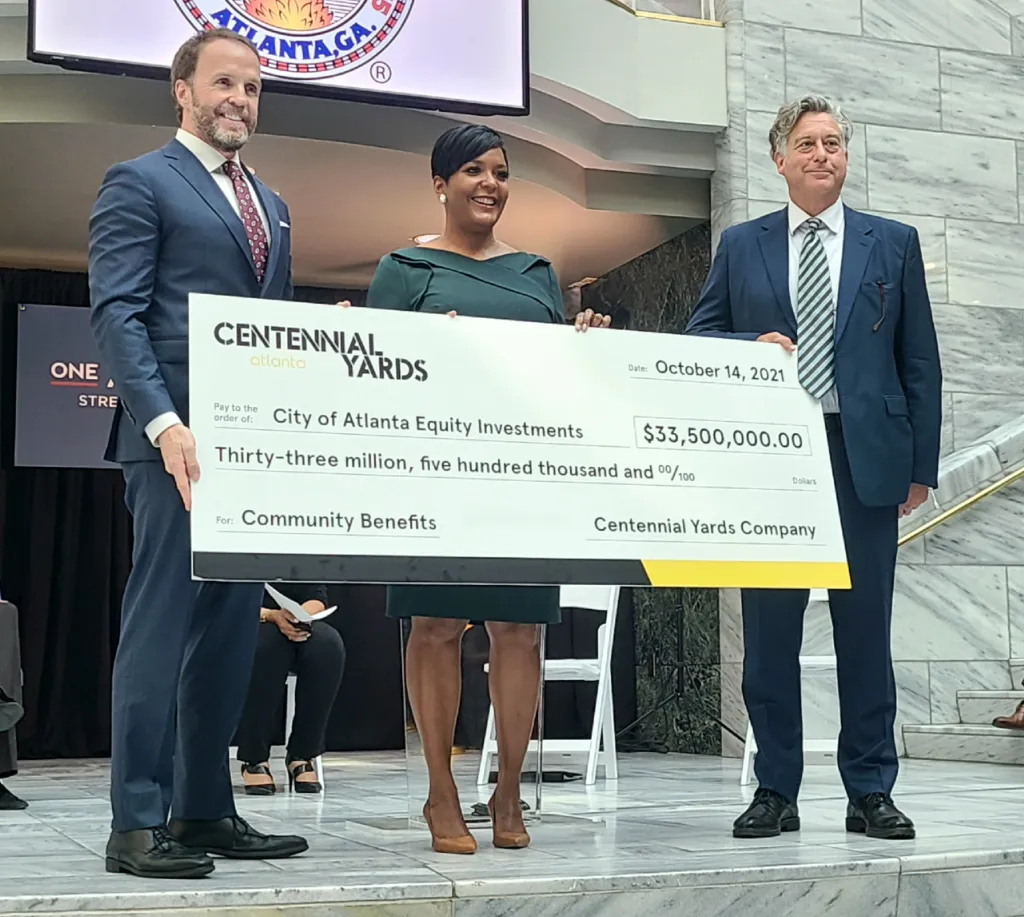
Centennial Yards
Under Mayor Keisha Lance Bottoms, the Gulch is sold to real estate developer CIM Group with plans to infill the site, funded by a $2 billion taxpayer-backed incentive — the largest in city history and the subject of ongoing property tax lawsuits. Plans do not include a new transit terminal for MARTA.

The Gulch, the railroads and the start of Atlanta
Urban designer Sakshi Nanda traces Atlanta's form back to the Terminus — the triangular railroad intersection that determined the city's layout, from the 1839 Zero-Mile Post to the present-day void.
Extra! Sakshi Nanda at ThreadATL →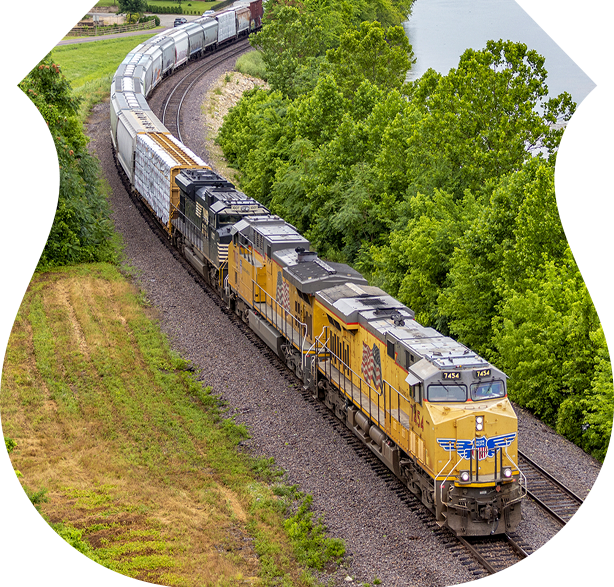
Union Pacific and Norfolk Southern Announce Merger
Union Pacific and Norfolk Southern announce an $85 billion merger agreement to create America's first transcontinental railroad, combining UP's western network with NS's eastern operations. Norfolk Southern is one of three Class I railroads serving Atlanta.
Norfolk Southern Newsroom →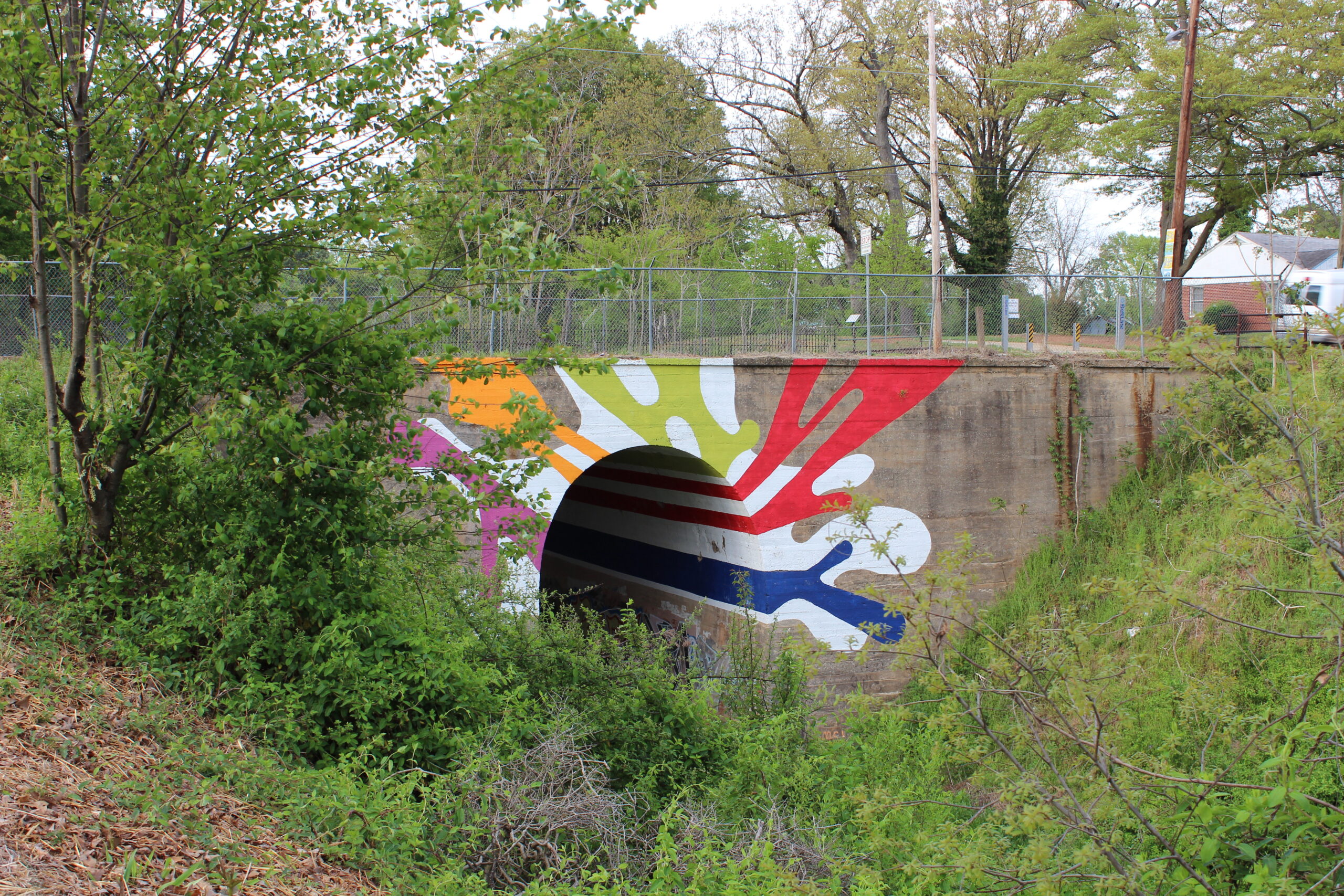
National Geographic Features the Atlanta BeltLine
National Geographic highlights Atlanta's 22-mile BeltLine as the best way to see the city, connecting 45 neighborhoods via a network of trails and parks built on former railroad corridors.
National Geographic →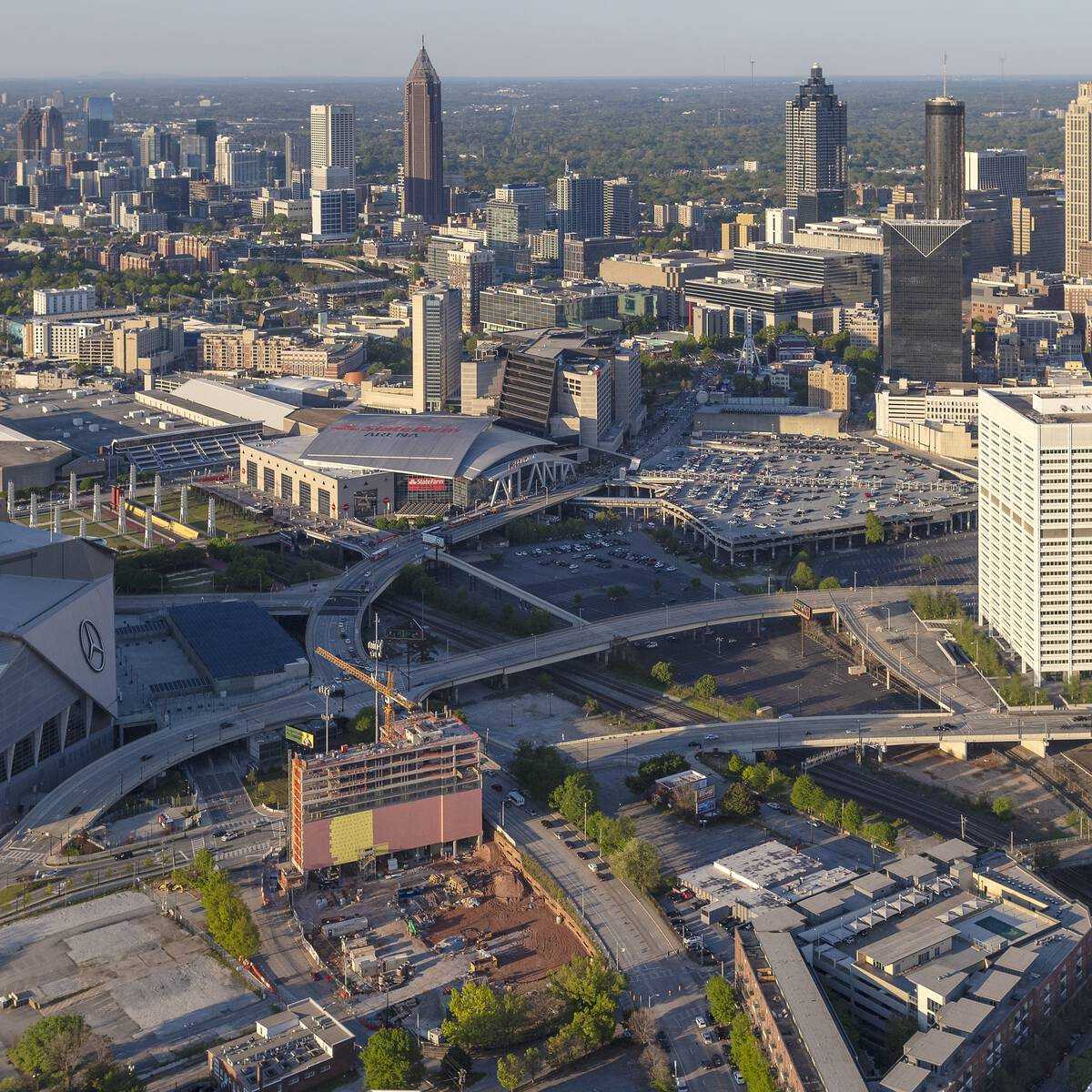
★ You Are Here
The site of Terminal Station remains undeveloped as a transit hub. Centennial Yards construction continues at the Gulch. Atlanta's rail legacy — and its future — remains unclear.